


Porsche 911 GT3: What Makes It Different From Every Other 911
Discover what sets the Porsche 911 GT3 apart, from its race-inspired engineering and powerful performance to its precision handling and unique design.
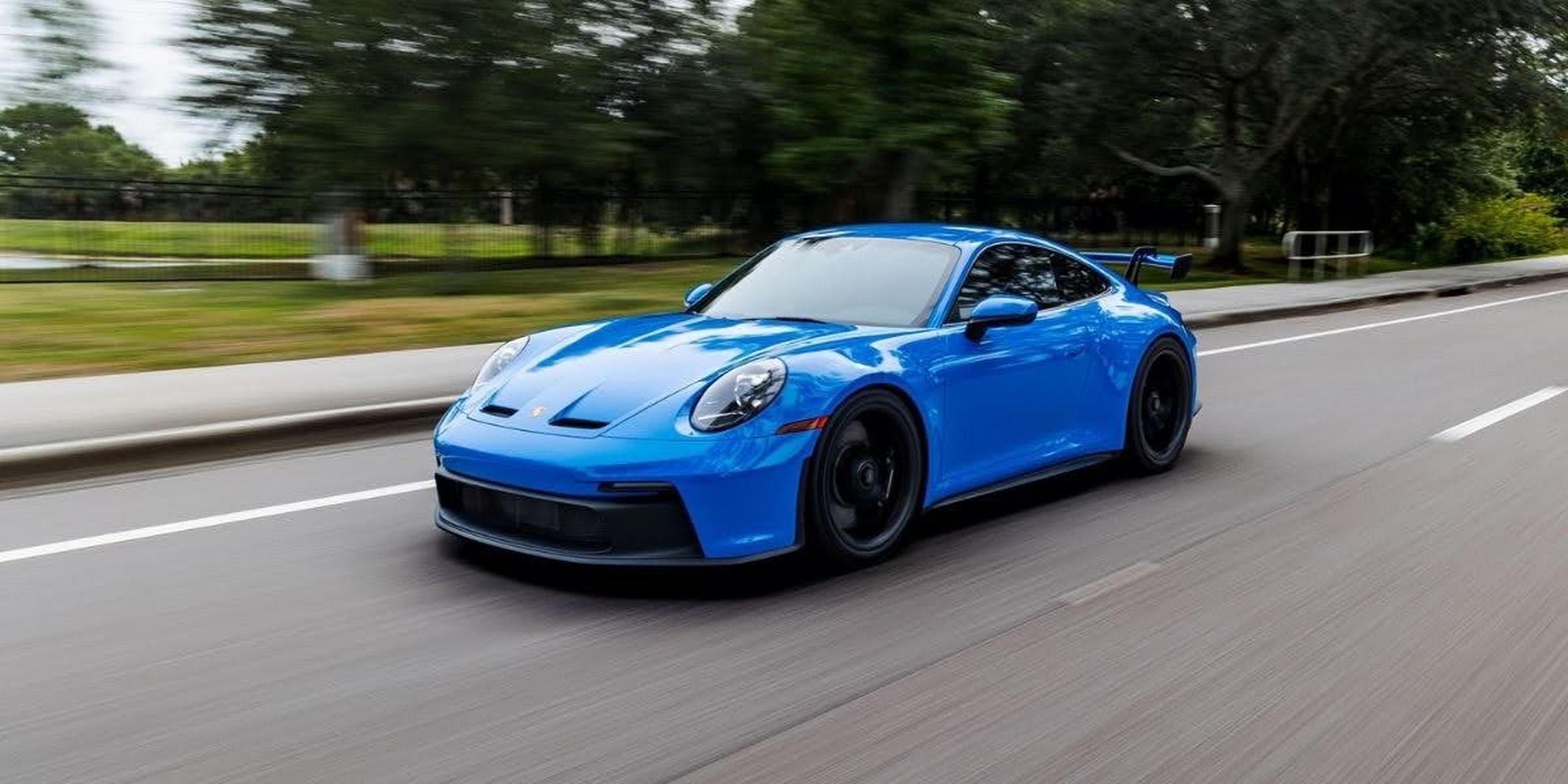
The Porsche 911 GT3 stands apart from other 911 models through its close connection to motorsport. While every Porsche 911 offers impressive engineering and performance, the GT3 takes a different approach. Its naturally aspirated engine, track-focused suspension, aerodynamic design, and precise handling make it one of Porsche's most driver-focused sports cars.
Unlike other 911 models that balance performance with daily comfort, the GT3 places greater emphasis on driver feedback, cornering ability, and control at high speeds. Yet it remains a road-legal sports car that owners can enjoy beyond the racetrack.
For buyers considering a Porsche 911, understanding these differences is important. The GT3 isn't simply a faster version of a standard 911. It offers a distinct driving experience shaped by decades of Porsche motorsport development.
What Makes the Porsche 911 GT3 Different?
The Porsche 911 GT3 is a high-performance version of the 911 developed with engineering principles drawn from motorsport. Its main differences involve the engine, transmission, suspension, aerodynamics, and connection between the driver and the road.
Several features define the GT3:
Naturally aspirated flat-six engine: Unlike turbocharged Carrera models, the GT3 uses an engine designed to reach exceptionally high revolutions.
Motorsport-inspired suspension: Its suspension improves steering response and stability during demanding cornering.
Advanced aerodynamics: Functional aerodynamic components help produce downforce and improve high-speed stability.
Rear-axle steering: This system improves agility in tight corners and stability at higher speeds.
Track-focused equipment: Available lightweight components and performance tires support demanding driving.
These features work together to create a sports car that responds closely to driver inputs.
Why Porsche Developed the GT3
Porsche introduced the first 911 GT3 in 1999 as part of the 996 generation. Its purpose was to bring motorsport engineering into a production sports car that could legally operate on public roads.
Over several generations, Porsche has improved the GT3's engine, suspension, aerodynamics, and electronic systems while preserving its original purpose: delivering a road-legal 911 with a direct connection to motorsport.
The Porsche 911 GT3 Engine: Why Naturally Aspirated Matters
One of the clearest differences between the GT3 and other modern 911 models is its engine.
The updated 992.2-generation GT3 uses a 4.0-liter naturally aspirated flat-six engine. Unlike a turbocharged engine, it draws air into the cylinders without using turbochargers to increase intake pressure.
According to Porsche's official introduction of the updated 911 GT3, the model produces 502 horsepower in U.S. specification and can reach 9,000 rpm.
That high engine speed is central to the GT3 experience.
How a 9,000 RPM Redline Changes Driving
Most road cars reach their engine speed limits well below 9,000 rpm. The GT3's engine operates at much higher speeds while maintaining precise throttle response.
As engine speed rises, drivers experience a progressive increase in power accompanied by the distinctive sound of the flat-six engine.
This design offers several benefits:
Immediate throttle response without waiting for turbocharger boost.
A wide range of usable engine speeds.
Precise control over power delivery during cornering.
A distinctive engine sound that changes as revolutions increase.
Unlike turbocharged models that deliver substantial torque at lower engine speeds, the GT3 encourages drivers to make greater use of its rev range.
Why Doesn't the GT3 Use Turbochargers?
Turbochargers increase engine output by forcing additional air into the combustion chambers. Porsche uses this technology throughout much of the 911 lineup because it supports rapid acceleration and strong torque.
The GT3 follows a different engineering philosophy. Its naturally aspirated engine offers a close relationship between accelerator movement and engine response.
This doesn't mean naturally aspirated engines are always better. The GT3 simply prioritizes immediate response, high engine speeds, and driver involvement over maximum low-speed torque.
Porsche 911 GT3 Performance and Acceleration
Performance figures help explain the GT3's capabilities, but they don't tell the entire story.
For the updated 992.2-generation GT3, Porsche lists the following U.S. specifications:
Engine: 4.0-liter naturally aspirated flat-six
Horsepower: 502 hp
Maximum engine speed: 9,000 rpm
Transmission: Seven-speed PDK or six-speed GT Sport manual
PDK acceleration from 0 to 60 mph: Approximately 3.2 seconds
PDK top track speed: Approximately 193 mph
Figures may differ by model year and transmission.
Why Acceleration Isn't Everything
Some Porsche 911 models accelerate more quickly in a straight line than the GT3.
For example, the 911 Turbo S uses turbocharging and all-wheel drive to achieve rapid acceleration from a standing start.
The GT3 is engineered around a broader performance goal. Its suspension, steering, braking, engine response, and aerodynamics work together during repeated high-speed cornering and braking.
These strengths become especially noticeable on racetracks, where a vehicle must accelerate, turn, and brake repeatedly while maintaining control.
GT3 911 Porsche Handling: What Makes It So Precise?
Drivers searching for gt3 911 porsche often want to understand how its handling compares with other 911 models.
The GT3's engineering goes beyond firmer springs or larger tires. Porsche designed its suspension and steering systems to provide accurate control under demanding conditions.
Double-Wishbone Front Suspension
The GT3 uses a double-wishbone front suspension design inspired by motorsport technology.
Many other 911 variants use a MacPherson-strut front suspension layout.
The double-wishbone arrangement gives engineers greater control over wheel movement and tire alignment as the suspension compresses. This helps maintain favorable tire contact during hard cornering.
For drivers, the result can be greater confidence entering corners and more predictable responses when changing direction.
Rear-Axle Steering
Rear-axle steering is another important part of the GT3's handling.
At lower speeds, the rear wheels can turn slightly in the opposite direction from the front wheels, helping the vehicle change direction more easily.
At higher speeds, the rear wheels can turn in the same direction as the front wheels, improving stability.
Although rear-axle steering is available on other Porsche models, its calibration complements the GT3's track-focused chassis.
Suspension and Driver Feedback
The GT3's suspension prioritizes precise control and quick responses.
Compared with a Carrera configured for everyday comfort, the GT3 generally communicates more road texture and suspension movement to the driver.
This feedback can help drivers understand how the tires interact with the pavement, although it also creates a firmer ride on uneven roads.
Aerodynamics: Why the Porsche 911 GT3 Looks Different
The GT3's exterior design serves a practical purpose. Its bodywork manages airflow around and underneath the vehicle to improve stability and cornering performance.
The Rear Wing and Downforce
The GT3's fixed rear wing helps produce downforce, an aerodynamic force that pushes the vehicle toward the road.
As speed increases, downforce can improve tire grip without adding vehicle weight.
The rear wing works with the front aerodynamic components to maintain balance between the front and rear axles.
Front Airflow and Underbody Design
Porsche also uses front air guides, a front spoiler, and carefully designed underbody components to manage airflow.
The updated GT3 incorporates aerodynamic components influenced by the GT3 RS, including front-axle aero bars.
Together, these elements help the GT3 maintain stability during high-speed driving.
Lightweight Engineering and the Weissach Package
Weight affects acceleration, braking, and handling. A lighter vehicle generally requires less energy to accelerate and can respond more quickly to steering inputs.
Porsche uses lightweight materials and carefully selected components throughout the GT3.
Lightweight Wheels
The updated GT3 features lightweight aluminum wheels, with optional magnesium wheels available through specific equipment packages.
Porsche reports that the revised aluminum wheels save approximately 3.3 pounds compared with the previous model's wheels.
Reducing wheel weight can improve how the suspension responds to uneven pavement because wheels contribute to unsprung mass.
What Is the Weissach Package?
The Weissach Package offers additional lightweight equipment inspired by motorsport.
Depending on configuration, it can include carbon-fiber-reinforced plastic components, lightweight exterior details, and access to optional magnesium wheels.
These features may appeal to drivers focused on track performance. However, buyers should consider whether the additional cost aligns with how they intend to use the vehicle.
Porsche 911 GT3 vs. Carrera: Which Is Better?
The GT3 and Carrera share the 911's basic design, rear-engine layout, and engineering heritage. However, their driving priorities differ.
The Carrera offers sports car performance while remaining comfortable and practical for regular use.
The GT3 places greater importance on precise handling, high engine speeds, and track capability.
Everyday Comfort vs. Track Performance
The Carrera generally provides a more forgiving ride on uneven roads and equipment suited to frequent travel.
The GT3 uses firmer suspension settings and performance-oriented components that can make daily driving more demanding.
Its low ground clearance also requires additional care around driveways, parking entrances, and road obstacles.
Engine Response and Driving Character
Modern Carrera models use turbocharged flat-six engines that deliver strong torque across a broad engine-speed range.
The GT3's naturally aspirated engine behaves differently. Its power delivery encourages higher engine speeds and more deliberate gear selection.
Drivers who enjoy working closely with the engine and transmission may prefer the GT3. Those seeking strong performance with greater everyday comfort may find the Carrera more suitable.
Porsche 911 GT3 vs. Turbo S: Two Approaches to Performance
The GT3 and Turbo S represent different approaches to high-performance engineering.
The Turbo S prioritizes rapid acceleration, strong torque, and confident performance across varied driving conditions.
The GT3 focuses on lightweight construction, steering precision, and sustained track capability.
Rear-Wheel Drive vs. All-Wheel Drive
The GT3 uses rear-wheel drive, sending engine power to the rear wheels. This contributes to its traditional sports car character.
The Turbo S uses all-wheel drive to distribute power between the front and rear axles as needed.
That additional traction is particularly useful during acceleration and in changing road conditions.
Neither design is universally better. Drivers who value detailed steering feedback and racetrack performance may prefer the GT3, while those seeking accessible acceleration and everyday versatility may favor the Turbo S.
Porsche 911 GT3 vs. GT3 RS: What's the Difference?
The GT3 RS takes the GT3's motorsport-focused engineering further, with more aggressive aerodynamics and additional equipment designed for circuit performance.
Aerodynamics and Track Equipment
The GT3 RS uses a more extensive aerodynamic package, including active systems that manage downforce and drag.
Its bodywork features prominent airflow components and a large rear wing.
The standard GT3 also produces downforce, but its aerodynamic design is less extreme.
This can make the GT3 a more balanced choice for owners who spend significant time on public roads.
Is the GT3 RS Faster?
The answer depends on the type of performance being measured.
The GT3 RS is designed to provide greater aerodynamic grip during demanding track driving.
However, greater downforce also creates additional drag, meaning acceleration figures and top speed don't always favor the RS.
Buyers should compare the vehicles based on their intended use rather than assuming the more track-focused model is better in every situation.
Porsche 911 GT3 Touring: A More Understated Option
The GT3 with Touring Package offers much of the standard GT3's mechanical character in a more restrained design.
It retains the naturally aspirated flat-six engine and performance-focused chassis but replaces the prominent fixed rear wing with a retractable spoiler.
What Changes With the Touring Package?
The Touring Package follows the traditional 911 silhouette more closely and offers interior choices that appeal to buyers seeking a classic sports car appearance.
The updated generation also introduced optional rear seats for the GT3 Touring, depending on market and configuration.
According to Porsche's official GT3 and Touring Package announcement, both versions are available with a six-speed manual or seven-speed PDK transmission.
The Touring may appeal to buyers who want the GT3 engine and handling without the visual presence of a large rear wing.
However, its suspension and performance-oriented character remain distinctly GT3.
Manual vs. PDK: Choosing the Right GT3 Transmission
Transmission choice is an important decision when configuring a GT3.
Porsche offers a six-speed GT Sport manual transmission and a seven-speed Porsche Doppelkupplung, commonly called PDK.
Six-Speed Manual Transmission
The manual transmission allows drivers to select gears using a clutch pedal and gear lever.
For enthusiasts who enjoy shifting, this creates an additional connection with the vehicle.
However, the manual requires more effort in traffic and generally produces slower acceleration times than PDK.
Seven-Speed PDK Transmission
PDK is Porsche's dual-clutch automatic transmission. It prepares the next gear in advance, allowing quick shifts with minimal interruption in power delivery.
Drivers can use automatic shifting or select gears with steering-wheel paddles.
PDK is particularly useful during track driving, where consistent shifts allow the driver to focus on braking, steering, and acceleration.
The better choice depends on personal preference and intended use.
Can You Daily Drive a Porsche 911 GT3?
Yes, the GT3 is road legal and can be used for everyday transportation. However, its track-focused engineering creates practical limitations.
Ride Comfort and Ground Clearance
The GT3's firm suspension and performance tires make road imperfections more noticeable than in many other 911 models.
Road noise may also be more pronounced, particularly during longer highway trips.
Its low ground clearance requires attention around steep driveways, parking ramps, and speed bumps.
An available front-axle lift system can help manage certain obstacles by temporarily raising the front of the vehicle.
Tires and Weather Conditions
Performance tires provide high levels of grip under suitable conditions, but some track-oriented tires may wear more quickly or offer reduced traction in cold or wet weather.
For owners in South Florida, where heavy rain can develop quickly, tire selection and condition deserve particular attention.
Drivers should review the specifications of their selected tires and follow Porsche's recommendations.
Porsche 911 GT3 Ownership Costs and Maintenance
The purchase price is only one part of GT3 ownership.
Maintenance, tires, insurance, and replacement components can differ from those associated with a standard Carrera.
Owners should follow Porsche's recommended maintenance schedule and consider additional inspections after demanding track use.
Important maintenance areas include:
Engine oil condition and recommended service intervals.
Brake pad and rotor wear.
Tire condition, age, and alignment.
Suspension and wheel components.
Brake fluid requirements for demanding driving.
Insurance costs also depend on the vehicle, driver, location, and coverage.
Owners planning track events should review their policies carefully because standard auto insurance may exclude track-related damage.
How to Choose the Right Porsche 911 GT3
Choosing a GT3 involves more than selecting a transmission or exterior color.
Buyers should consider their driving habits, preferred features, and whether a new or pre-owned model better suits their needs.
Consider How You'll Use the Vehicle
A GT3 intended primarily for weekend road trips may benefit from different equipment than one used frequently at track events.
Buyers focused on road use may prioritize adjustable seats, front-axle lift, and interior comfort.
Drivers planning regular circuit visits may value lightweight equipment, seat support, and tire selection.
Evaluate New and Pre-Owned Models
A pre-owned GT3 can provide access to earlier generations with distinct driving characteristics.
However, buyers should review maintenance records, vehicle history, and signs of previous track use.
A thorough inspection should cover brakes, suspension, tires, engine condition, and bodywork.
The best choice depends on the individual vehicle's history and condition, not simply its mileage.
Frequently Asked Questions About Porsche 911 GT3
What makes the Porsche 911 GT3 different from a regular 911?
The Porsche 911 GT3 differs from a regular Carrera through its naturally aspirated engine, double-wishbone front suspension, aerodynamic design, and track-focused equipment. Its engine reaches 9,000 rpm, creating a different power delivery and driving character from turbocharged Carrera models. While both offer strong performance, the Carrera places greater emphasis on everyday comfort and versatility.
Is the Porsche 911 GT3 faster than the Turbo S?
Not in every situation. The Turbo S generally accelerates more quickly in a straight line because of its turbocharged engine and all-wheel-drive traction. The Porsche 911 GT3 emphasizes precise handling, engine response, and sustained circuit performance. On a racetrack, results depend on the course, tires, conditions, and driver.
What does GT3 911 Porsche mean?
The search phrase gt3 911 porsche refers to the Porsche 911 GT3, a road-legal performance model developed using engineering ideas influenced by Porsche motorsport. The GT3 designation reflects Porsche's connection to GT-class racing. Its defining features include a high-revving flat-six engine, rear-wheel drive, and a chassis designed for precise handling.
Can you use a Porsche 911 GT3 as a daily driver?
Yes, the Porsche 911 GT3 can serve as a daily driver, although it requires more compromises than a Carrera. Its firm suspension, low ground clearance, and performance-oriented tires can make routine driving less convenient. Options such as front-axle lift and adjustable seats may improve everyday usability.
Is the Porsche 911 GT3 available with a manual transmission?
Yes. The updated Porsche 911 GT3 offers a six-speed GT Sport manual transmission and a seven-speed PDK dual-clutch transmission. The manual appeals to drivers who enjoy shifting gears, while PDK provides quick, consistent shifts. Both transmissions are available on the standard GT3 and Touring Package.
What is the difference between the GT3 and GT3 Touring?
The main differences involve exterior design, aerodynamics, and certain interior options. The standard GT3 features a fixed rear wing, while the Touring uses a retractable spoiler for a more understated appearance. Both share the same basic engine and performance-focused chassis.
Is a Porsche 911 GT3 worth buying?
A Porsche 911 GT3 may be worth buying for drivers who value naturally aspirated engine response, precise handling, and motorsport-inspired engineering. However, its higher ownership costs and reduced everyday comfort should be considered. Buyers should evaluate their budget, driving habits, and interest in track events before deciding.
Discover What Makes the Porsche 911 GT3 Special
The Porsche 911 GT3 offers a distinct interpretation of the 911 formula. Its naturally aspirated 4.0-liter flat-six, 9,000 rpm engine speed, motorsport-inspired suspension, and carefully developed aerodynamics set it apart from other models.
For drivers who appreciate precise steering, responsive power delivery, and a close connection to the road, the GT3 offers an engaging driving experience.
However, the right Porsche depends on your priorities. The Carrera offers greater everyday comfort, the Turbo S emphasizes accessible acceleration, and the GT3 RS takes circuit-focused engineering further.
If you're considering a GT3, contact Porsche West Palm Beach to discuss available inventory, configurations, and ownership considerations. The team can help you compare models and find the Porsche 911 that best matches your driving preferences.